

- industrial air compressor
- desiccant compressed air dryer
- diesel air compressor
- large vacuum pump
- oil free piston air compressor
- oil free screw air compressor
- oil free scroll air compressor
- pm vsd dual stage screw air compressor
- pm vsd single stage screw air compressor
- refrigerated air dryer
- screw blower
- single stage double screw air compressor
- two stage double screw air compressor
- ultra high pressure air compressor


 English
  Français
  Tiếng Việt
  Italiano
  Nederlands
  Türkçe
  Svenska
  Polski
  Română
  Latviešu
  한국어
한국어  Русский
  Español
  Deutsch
  Українська
  Português
  العربية
  Indonesian
  Čeština
  Suomi
Suomi  Eesti
Eesti  Български
  Dansk
Dansk  Lietuvių
  Bokmål
  Slovenčina
  Slovenščina
  Ελληνικά
  Magyar
  עברית
עברית 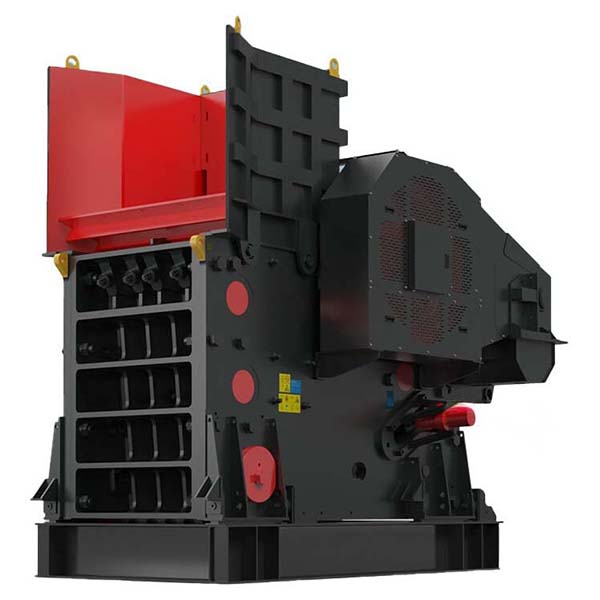
jaw crusher which with deep v-shaped crushing chamber
Jaw crusher is a kind of crushing equipment widely used in mining, metallurgy, building materials, chemical industry and other industrial fields, which has the advantages of occupying small space, large crushing ratio and stable operation.
Description
Jaw crusher can effectively carry out coarse crushing of large materials, it is one of the common equipments in the production of ore crushing, and becomes an indispensable equipment in the fixed crushing production line and mobile crushing plant.
Features of Jaw Crusher:
- small occupation space: due to the compact design and simple structure of the jaw crusher, it occupies less space and is suitable for the operating environment with limited space.
- large crushing ratio: the jaw crusher adopts a deep V-shaped crushing chamber, which can realize a larger feeding capacity, meet the crushing needs of more materials and improve the crushing efficiency.
- high strength steel plate elbow plate: the elbow plate is made of high strength steel plate, which is lighter than the traditional cast iron elbow plate, and it can be bent when overloaded, so as to avoid the elbow plate breaking and falling and causing damage to other parts (such as conveyor belt).
- Hook and wedge key connection: the connection between the flywheel and the main shaft adopts the hook and wedge key design, which makes the disassembling and assembling of the flywheel more convenient, and facilitates the maintenance of the equipment and the replacement of parts.
- flywheel counterweight system: the position of the flywheel counterweight block is carefully designed to optimize the dynamic balancing performance of the whole machine, thus reducing vibration and improving the smoothness and stability of the equipment operation.
- reserved structure: the design is lightweight and small, saving the space of the equipment, making the installation and transportation more convenient and quick, adapting to the needs of different sites.
The working principle of jaw crusher:
Based on the way of bending and squeezing, as follows:
- the motor drives the belt and pulley, and drives the movable jaw up and down through the eccentric shaft.
- when the movable jaw rises, the angle between the elbow plate and the movable jaw becomes larger, and the movable jaw plate is close to the fixed jaw plate, at this time, the material in the crushing chamber is compressed or cut to pieces to achieve the purpose of crushing.
- When the movable jaw falls, the angle between the elbow plate and the movable jaw becomes smaller, the movable jaw plate moves away from the fixed jaw plate, and the material is discharged through the opening in the lower part of the crushing cavity.
- As the motor rotates continuously, the movable jaw carries out crushing and discharging operation periodically, thus realizing continuous mass production.
This working method is not only efficient, but also can handle materials of different hardness, widely used in primary crushing of ores, stones and other materials.
Jaw crusher application fields:
- Mining industry: It is used for primary crushing of various ores, and is suitable for crushing of hard ores such as granite, quartzite, iron ore, etc.
- Metallurgical industry: used for ore crushing in the smelting process, supporting the mining and processing of metal minerals.
- Construction industry: It is suitable for stone crushing in quarries, especially common in enterprises producing sand and gravel materials, and can effectively crush large stones into fine grains.
- Cement industry: It is used for preliminary crushing of limestone, clay and other cement raw materials, providing materials for subsequent grinding and processing.
- chemical industry: in the field of fertilizer production, slag processing, etc., used for crushing various chemical raw materials or minerals.
- sand industry: as part of the sand production line, the jaw crusher is able to crush large stones into fine-grained materials suitable for subsequent processing.
Advantages of Jaw Crusher:
- high efficiency crushing capacity: deep V-shaped crushing chamber makes the crushing efficiency increase, the material can pass through the crushing chamber more quickly, reduce the stagnation, and improve the production capacity.
- easy to operate: the high strength steel design of the elbow plate improves the service life, reduces the frequency of maintenance during operation, and reduces the downtime.
- Stable structure: Equipped with flywheel counterweight system and optimized dynamic balance design, it can reduce vibration and make the equipment more stable during long time operation.
- Space and cost saving: Compact design and simplified structure saves space for installation and transportation, and at the same time reduces the transportation and installation cost of the equipment.
Technical Parameters
| Model | Max feeding size | Feed opening | Discharge opening range | Capacity(ton/h) | Motor power | Dimensions(Lxwxh) |
|---|---|---|---|---|---|---|
| CX80 | 520x800mm | 420mm | 60 to 150mm | 80 to 290 | 75kw | 2650x1540x1780mm |
| CJ96 | 480mm | 930x580mm | 60 to 175mm | 105 to 390 | 90kw | 2850x2270x1950mm |
| CJ106 | 560mm | 1060x700mm | 70 to 200mm | 150 to 500 | 110kw | 3280x2580x2400mm |
| CJ120 | 700mm | 1200x870mm | 70 to 200mm | 175 to 610 | 160kw | 3700x2790x2950mm |
| CJ125 | 760mm | 1250x950mm | 100 to 250mm | 270 to 831 | 160kw | 4230x2780x2960mm |
| CJ150 | 960mm | 1400x1200mm | 125 to 250mm | 340 to 880 | 200kw | 5030x3440x3970mm |
| CJ160 | 960mm | 1600x1200mm | 150 to 300mm | 430 to 1145 | 250kw | 5780x3460x3580mm |
| CJ200 | 1200mm | 2000x1500mm | 175 to 300mm | 630 to 1435 | 400kw | 6600x4030x4400mm |