

- industrial air compressor
- desiccant compressed air dryer
- diesel air compressor
- large vacuum pump
- oil free piston air compressor
- oil free screw air compressor
- oil free scroll air compressor
- pm vsd dual stage screw air compressor
- pm vsd single stage screw air compressor
- refrigerated air dryer
- screw blower
- single stage double screw air compressor
- two stage double screw air compressor
- ultra high pressure air compressor


 English
  Français
  Tiếng Việt
  Italiano
  Nederlands
  Türkçe
  Svenska
  Polski
  Română
  Latviešu
  한국어
한국어  Русский
  Español
  Deutsch
  Українська
  Português
  العربية
  Indonesian
  Čeština
  Suomi
Suomi  Eesti
Eesti  Български
  Dansk
Dansk  Lietuvių
  Bokmål
  Slovenčina
  Slovenščina
  Ελληνικά
  Magyar
  עברית
עברית 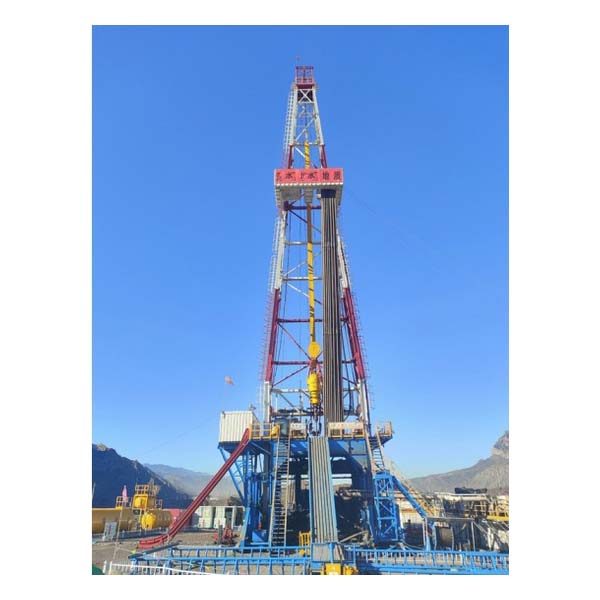
oil and gas drilling rig solution for deep exploration
A oil and gas drilling rig is an efficient piece of equipment used for the exploration and extraction of oil, gas, and geothermal resources. It features advanced structure, stable performance, and adaptability to various complex geological conditions, and is widely applied in deep and challenging drilling projects.
Description
Oil and Gas Drilling Rig
A oil and gas drilling rig is a drilling device specially developed to meet various drilling requirements. By adopting multiple drive modes, such as L-type and J-type mechanical drives, it can flexibly adapt to drilling operations under different working conditions. The power system is scientifically distributed, which improves the overall power utilization rate.
Main Features of Oil and Gas Drilling Rigs
- Multiple mechanical drive modes are available to suit various drilling environments;
- The winch offers both internal and external shifting options. For models above 2000 meters, the winch gear shift adopts coaxial clutch pneumatic remote control, making operation more convenient and efficient;
- The main brake system includes both band brakes and hydraulic disc brakes, while the auxiliary brake uses an electromagnetic eddy current brake to ensure operational safety;
- Drilling rigs of 4000 meters and above adopt a “high front, low rear” structural layout, with low-mounted power and transmission systems. Power is efficiently transmitted to the drilling floor through a bevel gearbox and universal shaft;
- Equipped with a sand-retrieving drum, mechanical friction cathead, and rotary drive device to enhance equipment versatility;
- Optional independent driller’s control cabin, with integrated air, electric, and hydraulic controls, allowing all drilling operations to be completed inside the cabin;
- Supports independent motor automatic drilling feed systems and top drive drilling devices, further improving automation and intelligence in drilling operations.
Application Fields
This series of oil and gas drilling rigs is widely used in oil and gas exploration, deep and ultra-deep well drilling, water resource development, and other engineering fields. It is especially suitable for complex geological structures and challenging drilling operations, providing strong technical support and assurance for energy development and geological exploration.
Technical Parameters
| Model | B70L-J | |
|---|---|---|
| Nominal Drilling Depth | 127mm (5 inch) Drill Pipe | 4000-6000 |
| 114mm (4 1/2 inch) Drill Pipe | 4500-7000 | |
| Max Hook Load | 4500 | |
| Hook Speed | 0.21-1.36 0.25-1.91 | |
| Number of Lines in Travelling System | 12 | |
| Drilling Wire Rope Diameter | 38 | |
| Max Fast Line Pull | 485 | |
| Winch | Model | J70L |
| Rated Power | 1470 | |
| Gear Shifts | 6F(4F)+2R | |
| Main Brake | Band Brake or Hydraulic Disc Brake | |
| Auxiliary Brake | Electromagnetic Eddy Current Brake | |
| Crown Block | T450 | |
| Travelling Block | Y450 | |
| Sheave Outer Diameter of Travelling System | 1524 | |
| Hook | G450 | |
| Swivel | Bore Diameter | S450 |
| Gear Shifts | 75 | |
| Rotary Table | Bore Diameter | 952.5 |
| Gear Shifts | 6F(4F)+2R | |
| Derrick | Type | K |
| Height | 45 | |
| Max Load | 4500 | |
| Substructure | Type | Modular |
| Drill Floor Height | 7.5, 9 | |
| Clear Height | 6.3, 7.4 | |
| Mud Pump | Model, Quantity | F-1600, 3 |
| Drive Type | Diesel Engine Drive | |