

- industrial air compressor
- desiccant compressed air dryer
- diesel air compressor
- large vacuum pump
- oil free piston air compressor
- oil free screw air compressor
- oil free scroll air compressor
- pm vsd dual stage screw air compressor
- pm vsd single stage screw air compressor
- refrigerated air dryer
- screw blower
- single stage double screw air compressor
- two stage double screw air compressor
- ultra high pressure air compressor


 English
  Français
  Tiếng Việt
  Italiano
  Nederlands
  Türkçe
  Svenska
  Polski
  Română
  Latviešu
  한국어
한국어  Русский
  Español
  Deutsch
  Українська
  Português
  العربية
  Indonesian
  Čeština
  Suomi
Suomi  Eesti
Eesti  Български
  Dansk
Dansk  Lietuvių
  Bokmål
  Slovenčina
  Slovenščina
  Ελληνικά
  Magyar
  עברית
עברית 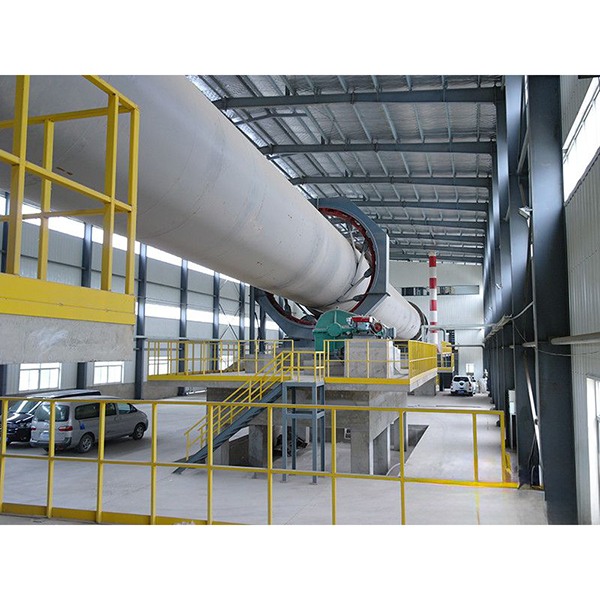
aluminum oxide rotary kiln with frequency conversion control
Alumina rotary kiln is a kind of thermal equipment used for high-temperature calcination treatment of raw materials of aluminum source, which mainly serves the production process of industrial alumina.
Description
Alumina Rotary Kiln Overview
Alumina rotary kilns play a central role in a variety of preparation processes such as the Bayer method, soda-lime sintering and composite methods, with calcination temperatures ranging from 950°C to 1700°C typically. Alumina (Al₂O₃) is an important inorganic compound with excellent characteristics such as high melting point, high hardness, good chemical stability, strong electrical insulation properties, etc. It is a key raw material in electrolytic aluminum, fine ceramics, electronic components, high-end refractories and aerospace materials.
Features of Alumina Rotary Kiln
- Structural optimization design: the kiln body is equipped with high-temperature resistant lining bricks, with good refractoriness and heat preservation, effectively extending the service life.
- High efficiency of heat utilization: the use of multi-stage preheating + uniform combustion structure to ensure that the heat is fully transferred to the material, reducing heat loss.
- Intelligent operation: introducing PLC automatic control system, with temperature, speed, negative pressure, gas flow and other key parameters of intelligent adjustment and alarm function.
- Fuel diversification: support natural gas, coal dust, heavy oil and other forms of fuel, according to the regional energy resources to facilitate flexible configuration.
- High-temperature sealing technology: the kiln head and kiln tail are equipped with pneumatic or mechanical sealing device, effectively preventing flue gas and dust from escaping.
Advantages of Alumina Rotary Kiln
- Excellent calcination effect: it can stably realize the phase transition process of alumina hydroxide or bauxite (e.g. the transition from γ-alumina to α-alumina), which guarantees uniform particle size distribution, stable crystal shape and high whiteness of the product.
- Significant energy saving and consumption reduction: the use of frequency conversion speed control and zoned combustion design, energy consumption than the traditional calcining equipment down 10% -15%, which helps to reduce the cost of tons of aluminum.
- Strong system stability: the whole machine runs smoothly, suitable for high-temperature continuous operation, suitable for large-scale alumina enterprises with an annual output of hundreds of thousands of tons.
- Outstanding environmental performance: the overall negative pressure operation design, with bag filter and exhaust gas purification system, can meet the strict industrial exhaust emission standards.
- Strong process compatibility: can be adapted to a variety of industrial alumina process (such as Bayer method, sintering method, mixed method), and at the same time applicable to different aluminum source raw materials (such as bauxite, aluminum hydroxide, etc.).
Working Principle of Alumina Rotary Kiln
- Raw materials into the kiln: pre-treated aluminum hydroxide or bauxite is continuously fed into the rotary kiln from the kiln tail.
- Material advancement and preheating: due to the rotary kiln has a certain inclination, and the cylinder continues to rotate slowly, the material in the gravity and rotational force, slowly from the high end to the low end of the movement, and at the same time in the front section of the area and the high-temperature flue gas preheating exchange, to remove some of the combined water.
- High-temperature calcination area: in the middle and back section, the burner will fuel combustion heat transfer to the material, the material temperature is gradually increased to the required calcination temperature. In this stage, aluminum hydroxide begins to decompose into alumina, and complete the crystal conversion, such as from γ-Al₂O₃ gradually to α-Al₂O₃ conversion.
- Discharge cooling: the calcined alumina is discharged from the kiln head and sent to the cooler for rapid cooling, which is conducive to the stable storage of the material and subsequent crushing process.
- The whole process: with the rotary kiln rotation so that the material continues to tumble, to achieve uniform heating, full reaction, to avoid local over-firing or under-firing, to ensure product consistency and high quality.
Application Fields of Alumina Rotary Kiln
- Aluminum electrolysis industry: as the raw material of anode electrolysis in electrolysis tank, it is the basic material of aluminum smelting.
- High-performance ceramics: calcined alpha alumina is used in the manufacture of alumina ceramic parts, such as ceramic balls, ceramic bearings, insulating substrates.
- Refractories: It is suitable for the production of high alumina bricks, shaped and unshaped refractories, which are widely used in metallurgy, electric power, cement and other industries.
- Catalyst carrier: high surface area alumina can be used as catalyst support material in the fields of oil cracking, desulfurization and exhaust gas purification.
- Electronic and electrotechnical materials: high purity alumina is suitable for integrated circuits, semiconductors, LED substrates and other high-end electronics industry.
- Biomedical industry: used in dental ceramics, artificial joints and other biologically inert materials.