

- industrial air compressor
- desiccant compressed air dryer
- diesel air compressor
- large vacuum pump
- oil free piston air compressor
- oil free screw air compressor
- oil free scroll air compressor
- pm vsd dual stage screw air compressor
- pm vsd single stage screw air compressor
- refrigerated air dryer
- screw blower
- single stage double screw air compressor
- two stage double screw air compressor
- ultra high pressure air compressor


 English
  Français
  Tiếng Việt
  Italiano
  Nederlands
  Türkçe
  Svenska
  Polski
  Română
  Latviešu
  한국어
한국어  Русский
  Español
  Deutsch
  Українська
  Português
  العربية
  Indonesian
  Čeština
  Suomi
Suomi  Eesti
Eesti  Български
  Dansk
Dansk  Lietuvių
  Bokmål
  Slovenčina
  Slovenščina
  Ελληνικά
  Magyar
  עברית
עברית 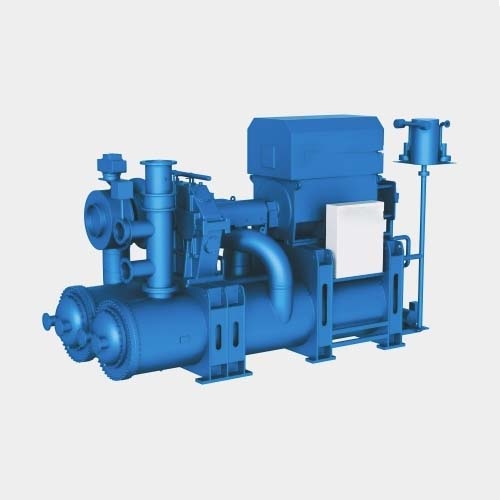
centrifugal compressor for the oil and gas industry
Large centrifugal compressors are specially designed to handle large quantities of gases, and can efficiently compress low-pressure gases to high-pressure conditions. The gas is compressed by the centrifugal force generated by the rotating impeller and is widely used in working conditions requiring high flow rates and high pressures.
Description
Centrifugal compressors ensure the stability of gases over long distances and in high-pressure operations. Equipped with high-powered motors and advanced engineering, they are essential in large-scale industrial production and energy conversion processes.
Technical Data of Centrifugal Compressors
- Flow rate: 400 to 1800 m³/min
- Discharge pressure: 0.6 to 150 bar
- Main motor power: 1000 to 15000 kW
- Main motor voltage: 380V, 3KV, 6KV, 10KV, 50Hz, 3Ph
- Base size: 12000mm x 6500mm
- Weight: 20000 kg to 70000 kg
Features of Centrifugal Compressor
- High flow rate and high pressure capability: Ideal for large-scale gas transportation and high-pressure operations, providing stable gas supply and supporting large-capacity transmission.
- High-efficiency design: Utilizes advanced centrifugal compression principles to reduce energy waste and ensure efficient, stable gas compression.
- Variety of voltage options: Compatible with 380V, 3KV, 6KV, 10KV, and more, for strong adaptability across regions and industries.
- Modular structure: Modular design enables easy installation, maintenance, upgrades, and reduces overall system operation and maintenance costs.
- Strong adaptability: Handles different gas types and working environments, especially suitable for natural gas, industrial gases, air, and other compressible gases.
Working Principle of Centrifugal Compressor
Centrifugal compressors operate based on centrifugal force. Gas enters the compressor inlet and is accelerated by a high-speed rotating impeller, generating significant centrifugal force. This force pushes the gas outward, where its kinetic energy is transformed into pressure energy within the compression chamber, completing the compression process.
- Gas inlet stage: Low-pressure gas enters via the air inlet and flows into the rotating impeller.
- Centrifugal acceleration stage: The impeller spins rapidly, increasing gas velocity and kinetic energy, pushing the gas to the compressor shell.
- Compression stage: Gas flows along the compressor wall, velocity is converted into pressure, forming high-pressure gas.
- Exhaust stage: Compressed gas is discharged through the exhaust port, completing the process.
Application Areas of Centrifugal Compressors
- Oil and gas industry:
- Natural gas pipeline systems: boosts gas pressure for stable, long-distance transmission.
- Oil refining: provides compressed air or gas to ensure continuity and stability in production processes.
- Chemical and petrochemical industries:
- Fertilizer and chemical production: gas pressurization and delivery for smooth chemical reactions.
- Core equipment for compressing and transporting nitrogen, hydrogen, and other industrial gases.
- Power and energy industry:
- Power and nuclear plants: provides high-pressure air for gas turbine start-up and combustion air supply.
- Energy recovery systems: enhances air supply and combustion efficiency.
- Air separation and oxygen production:
- Air separation units: extract oxygen, nitrogen, argon, and supply gases for metallurgy, pharmaceuticals, and other industries.
- Metallurgy & Mining:
- Metallurgy: provides pressurized gas for high-temperature smelting furnaces and pneumatic tools.
- Mining: supports mining equipment and air delivery systems for resource extraction and processing.
- Space and aviation field:
- Aviation engines and aerospace equipment: supplies the necessary air for compression and combustion, ensuring reliable operation of aircraft and spacecraft.