

- industrial air compressor
- desiccant compressed air dryer
- diesel air compressor
- large vacuum pump
- oil free piston air compressor
- oil free screw air compressor
- oil free scroll air compressor
- pm vsd dual stage screw air compressor
- pm vsd single stage screw air compressor
- refrigerated air dryer
- screw blower
- single stage double screw air compressor
- two stage double screw air compressor
- ultra high pressure air compressor


 English
  Français
  Tiếng Việt
  Italiano
  Nederlands
  Türkçe
  Svenska
  Polski
  Română
  Latviešu
  한국어
한국어  Русский
  Español
  Deutsch
  Українська
  Português
  العربية
  Indonesian
  Čeština
  Suomi
Suomi  Eesti
Eesti  Български
  Dansk
Dansk  Lietuvių
  Bokmål
  Slovenčina
  Slovenščina
  Ελληνικά
  Magyar
  עברית
עברית 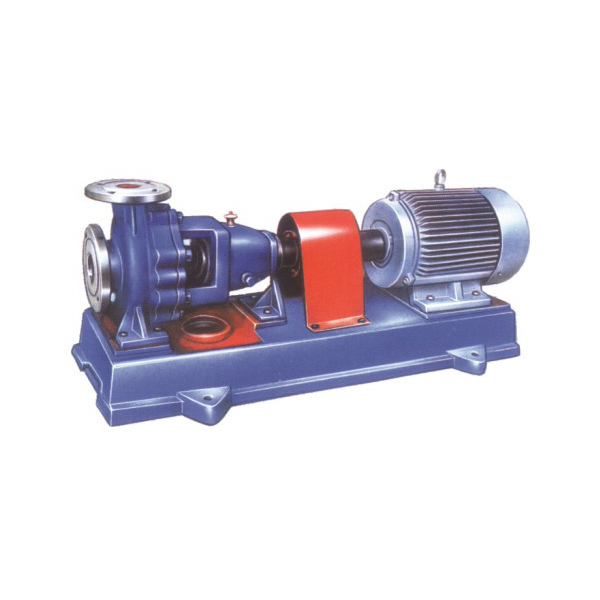
chemical centrifugal pump which is single stage cantilever
Single-stage cantilever chemical centrifugal pump is a kind of professional pump type widely used in chemical industry, metallurgy, electric power, papermaking, foodstuff, pharmacy, chemical fiber and other industries, which is specially used for conveying corrosive or liquid medium with high purity requirements.
Description
The single-stage cantilever chemical centrifugal pump is engineered for stable operation in complex working conditions, boasting excellent self-priming performance, high efficiency, and a long service life. Its versatile design and material options make it ideal for handling a wide range of corrosive media across multiple industries.
Main Features:
- Self-priming ability: Starts and suctions liquid without pre-filling, suitable for unstable liquid levels or pipelines with air. Quick self-priming, ideal for frequent start-ups.
- Cantilever structure: Compact, easy to install, base support not required—saves space and cost. Lightweight design reduces vibration and enhances stability.
- Corrosion resistance: Customizable with stainless steel, aluminum alloy, PP, PE, etc., for acids, alkalis, salts and other corrosive media. Ensures long lifespan by preventing chemical reactions with transported liquids.
- High-efficiency hydraulic design: Precisely calculated for high efficiency; special impeller and flow channel reduce energy consumption and maximize fluid transfer.
- Wear resistance: Key components (impeller, bearings, seals) are treated for wear resistance, supporting long-term, high-load operation and reducing maintenance frequency.
- Wide temperature adaptation: Operates from -20°C to 105°C; material and design options ensure reliable performance in varied environments.
- Performance point marking & size standardization: Standardized ratings and clear size markings simplify matching to design and installation requirements.
- Low-noise operation: Advanced hydraulics and optimized bearings ensure quiet performance, suitable for noise-sensitive environments.
Main Technical Parameters:
- Flow range: 6.3 to 400 m³/h
- Head range: 5 to 200 m
- Applicable medium temperature: -20°C to 105°C
- Working pressure: Customizable based on medium characteristics
- Material selection: Multiple corrosion-resistant options to suit transported media
Application Fields:
- Chemical industry: For corrosive chemicals, acids, alkalis, oils, and more.
- Metallurgical industry: For molten metal and slurry transport.
- Electric power industry: Fuel transport and cooling water circulation.
- Paper industry: For slurry, wastewater, and chemical additives.
- Food industry: Liquid transfer in food processing (syrup, juice, dairy, etc.).
- Chemical fiber industry: For polymers, solvents, and additives.