

- industrial air compressor
- desiccant compressed air dryer
- diesel air compressor
- large vacuum pump
- oil free piston air compressor
- oil free screw air compressor
- oil free scroll air compressor
- pm vsd dual stage screw air compressor
- pm vsd single stage screw air compressor
- refrigerated air dryer
- screw blower
- single stage double screw air compressor
- two stage double screw air compressor
- ultra high pressure air compressor


 English
  Français
  Tiếng Việt
  Italiano
  Nederlands
  Türkçe
  Svenska
  Polski
  Română
  Latviešu
  한국어
한국어  Русский
  Español
  Deutsch
  Українська
  Português
  العربية
  Indonesian
  Čeština
  Suomi
Suomi  Eesti
Eesti  Български
  Dansk
Dansk  Lietuvių
  Bokmål
  Slovenčina
  Slovenščina
  Ελληνικά
  Magyar
  עברית
עברית 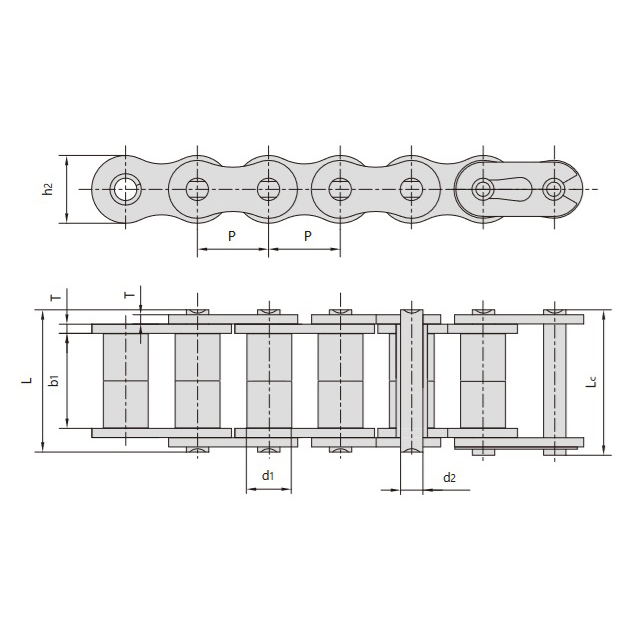
coupling chain for high temperature and humidity environment
The operating principle of the chain coupling is based on the engagement of a common chain with two side-by-side sprockets, a design that allows it to transmit torque efficiently while accommodating a certain amount of shaft deflection or angular deviation.
Description
Chain Coupling is a cost-effective and adaptable mechanical device widely used for torque transmission in various industrial environments. It consists of two coupling halves, a double or single row roller chain, and a protective housing. The chain engages two parallel sprockets with equal teeth, transmitting torque efficiently between shafts.
Structural Features
- Coupling Halves: Connect to each shaft for secure power transmission.
- Roller Chain: Available in double-row, single-row, toothed, or nylon chain options to suit different operating needs.
- Housing: Protects the chain and sprockets, enhancing durability and reliability.
Key Characteristics & Benefits
- Cost-Effective: Provides reliable transmission at a lower cost.
- Adaptability: Works well in high temperature, humid, and dusty environments.
- Compensating Capacity: Offers certain compensation for misalignment and vibration.
- Light Weight: Easy to install and maintain.
Limitations
- Not suitable for high-speed, severe shock load, or axial force transmission.
- Not recommended for frequent start/stop or reverse rotation operations, and vertical shaft couplings.
- Large air travel during reversal—should not be used for high-impact reverse transmissions.
Types
- Double-row roller chain coupling
- Single-row roller chain coupling
- Toothed chain coupling
- Nylon chain coupling
Applications
- Textile machinery
- Agricultural equipment
- Lifting and transportation systems
- Engineering and mining machinery
- Light industry and chemical machinery
- General industrial shaft transmission requirements
Maintenance & Installation Tips
- Check screw tightness after installation and commissioning.
- Apply adhesive to screw surfaces for enhanced protection.
- Inspect periodically for wear and proper alignment.
Despite its limitations in certain high-demand scenarios, Chain Coupling remains a preferred solution for many industrial applications thanks to its versatility, reliability, and ease of use.
Technical Parameters

coupling chain technical table