

- industrial air compressor
- desiccant compressed air dryer
- diesel air compressor
- large vacuum pump
- oil free piston air compressor
- oil free screw air compressor
- oil free scroll air compressor
- pm vsd dual stage screw air compressor
- pm vsd single stage screw air compressor
- refrigerated air dryer
- screw blower
- single stage double screw air compressor
- two stage double screw air compressor
- ultra high pressure air compressor


 English
  Français
  Tiếng Việt
  Italiano
  Nederlands
  Türkçe
  Svenska
  Polski
  Română
  Latviešu
  한국어
한국어  Русский
  Español
  Deutsch
  Українська
  Português
  العربية
  Indonesian
  Čeština
  Suomi
Suomi  Eesti
Eesti  Български
  Dansk
Dansk  Lietuvių
  Bokmål
  Slovenčina
  Slovenščina
  Ελληνικά
  Magyar
  עברית
עברית 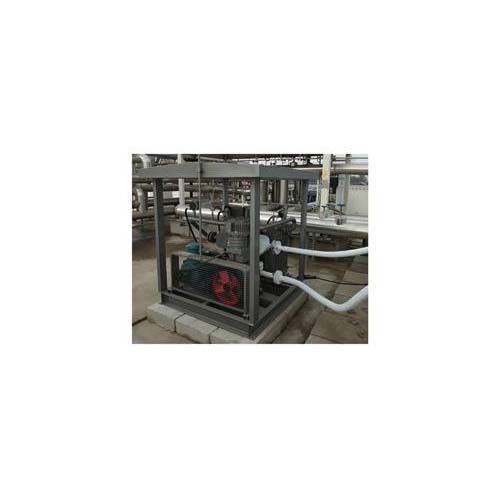
cryogenic compressor for low-temperature boil-off gas
Cryocompressor is a kind of equipment specialized in handling cryogenic gases, capable of pressurizing, conveying and recovering cryogenic gases in the temperature range of -30°C to -160°C.
Description
Cryogenic compressors play a vital role in deep-freezing processes, ensuring stable flow and pressure of gases at extremely low temperatures. They are indispensable in the processing and recovery of liquefied natural gas (LNG), liquid hydrogen (LH₂), liquid helium (LHe), cryogenic ethylene, and other specialty gases.
Main Features of Cryogenic Compressors
- Wide temperature adaptability: Operate reliably in environments from -160°C to -30°C, accommodating various deep-freeze industrial processes.
- High-efficiency design: Constructed with specialized cryogenic materials—such as stainless steel, aluminum alloys, or advanced cryogenic alloys—to ensure superior strength and durability even at ultra-low temperatures.
- Reliable sealing: Employ advanced cryogenic sealing technologies to prevent gas leakage and enhance overall system safety.
Working Principle of Cryogenic Compressors
- Cryogenic gas intake: At ultra-low temperatures (as low as -160°C), gases enter the compressor from storage tanks, pipelines, or process systems.
- Gas pressurization: Reciprocating pistons, screw rotors, or centrifugal impellers compress the gas, increasing its pressure for downstream use.
- Thermal management: Compression generates heat, so robust cooling systems (e.g., deep coolants, heat exchangers) maintain gas temperature within safe, efficient operating limits.
- Discharge transport: The compressed cryogenic gas is delivered to downstream applications such as liquefaction plants, recovery units, or high-pressure storage tanks.
Application Areas of Cryogenic Compressors
- LNG (Liquefied Natural Gas) Industry: Recovery, pressurization, and delivery of boil-off gas (BOG) to optimize energy usage and minimize waste.
- Deep-cooled gas recovery: Handling and recovery of cryogenic gases like liquid hydrogen (LH₂) and liquid helium (LHe) to improve storage efficiency and reduce losses.
- Petrochemical and chemical industry: Stable transport and separation of cryogenic gases, especially in ethylene cracking and gas separation processes.
- Aerospace and scientific research: Used in superconducting magnet cooling, cryogenic laboratories, and aerospace propulsion systems for reliable pressurized gas transport.
- New energy and hydrogen energy fields: Critical for hydrogen fuel cells, liquid hydrogen storage, and transportation systems to enhance hydrogen utilization and efficiency.