

- industrial air compressor
- desiccant compressed air dryer
- diesel air compressor
- large vacuum pump
- oil free piston air compressor
- oil free screw air compressor
- oil free scroll air compressor
- pm vsd dual stage screw air compressor
- pm vsd single stage screw air compressor
- refrigerated air dryer
- screw blower
- single stage double screw air compressor
- two stage double screw air compressor
- ultra high pressure air compressor


 English
  Français
  Tiếng Việt
  Italiano
  Nederlands
  Türkçe
  Svenska
  Polski
  Română
  Latviešu
  한국어
한국어  Русский
  Español
  Deutsch
  Українська
  Português
  العربية
  Indonesian
  Čeština
  Suomi
Suomi  Eesti
Eesti  Български
  Dansk
Dansk  Lietuvių
  Bokmål
  Slovenčina
  Slovenščina
  Ελληνικά
  Magyar
  עברית
עברית 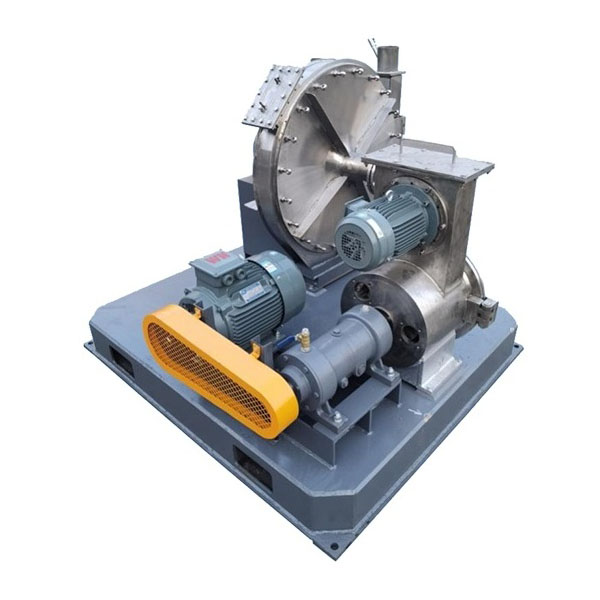
dry desulfurization pulverizer for sodium bicarbonate
Dry desulfurization pulverizer is a kind of pulverizing equipment specially used for flue gas desulfurization, which usually constitutes an integrated grinding and powder spraying device together with the conveying fan.
Description
Dry Desulfurization Pulverizer Overview
The dry desulfurization pulverizer refines adsorbents such as sodium bicarbonate (NaHCO₃) and adjusts powder particle size via a built-in grading system. The resulting ultrafine sodium bicarbonate powder features uniform particle distribution and a laminar or porous structure, which greatly increases its contact area with harmful flue gases, thus enhancing desulfurization. The powder is sprayed directly into combustion furnaces or reaction towers through multiple nozzles, efficiently adsorbing sulfur dioxide (SO₂), hydrogen chloride (HCl), and other pollutants at high temperature. This process can remove more than 95% of SO₂ and up to 99% of HCl from exhaust gases.
Working Principle of Dry Desulfurization Pulverizer
Sodium bicarbonate particles are injected into the flue gas stream at high speed using compressed air or airflow. The internal grading system ensures particle uniformity and optimal desulfurization size. Once the crushed powder enters the furnace or reaction tower, it decomposes at high temperature into sodium carbonate (Na₂CO₃), water (H₂O), and carbon dioxide (CO₂). Sodium bicarbonate then reacts with SO₂ and HCl in the exhaust, forming harmless substances and purifying the flue gas. The process occurs within a closed-loop system, preventing dust leakage and environmental pollution.
Features of Dry Desulfurization Pulverizer
- High-efficiency crushing and grading: The self-grading system ensures efficient particle size control and uniform fine powder, optimizing desulfurization effectiveness.
- Environmentally-friendly design: Closed system operation minimizes dust emissions and noise, meeting modern environmental standards.
- High temperature stability: Sodium bicarbonate powder remains stable at high temperatures, ensuring complete adsorption and chemical reaction during flue gas desulfurization.
- Automatic control: Intelligent PLC and touchscreen control system enable real-time adjustment and monitoring of key parameters, allowing one-key and automated operation.
Advantages of Dry Desulfurization Pulverizer
- Environmental protection and high efficiency: Effectively removes SO₂ and HCl from flue gas to meet strict environmental regulations, suitable for power plants, industrial boilers, and other major sources.
- Reduced investment and operating costs: Compared to traditional desulfurization, dry technology lowers both equipment investment and operating costs, especially when using low-cost sodium bicarbonate as the desulfurizer.
- Uniform particle distribution and significant effect: The fine powder’s laminar or porous structure enhances contact with pollutants, improving desulfurization efficiency.
- Green and clean production: Fully enclosed system operation reduces dust pollution and environmental impact, aligning with green manufacturing concepts.
Application Areas of Dry Desulfurization Pulverizer
- Thermal power plants – Flue gas desulfurization for emission standards compliance
- Iron and steel smelting – Removal of SO₂ and HCl from high-temperature exhaust
- Petrochemical industry – Gas purification in various chemical processes
- Cement production and waste gas treatment – Efficient removal of harmful gases in high-temperature, high-pressure environments
- Other fields – Any application requiring efficient gas purification and environmental protection