

- industrial air compressor
- desiccant compressed air dryer
- diesel air compressor
- large vacuum pump
- oil free piston air compressor
- oil free screw air compressor
- oil free scroll air compressor
- pm vsd dual stage screw air compressor
- pm vsd single stage screw air compressor
- refrigerated air dryer
- screw blower
- single stage double screw air compressor
- two stage double screw air compressor
- ultra high pressure air compressor


 English
  Français
  Tiếng Việt
  Italiano
  Nederlands
  Türkçe
  Svenska
  Polski
  Română
  Latviešu
  한국어
한국어  Русский
  Español
  Deutsch
  Українська
  Português
  العربية
  Indonesian
  Čeština
  Suomi
Suomi  Eesti
Eesti  Български
  Dansk
Dansk  Lietuvių
  Bokmål
  Slovenčina
  Slovenščina
  Ελληνικά
  Magyar
  עברית
עברית 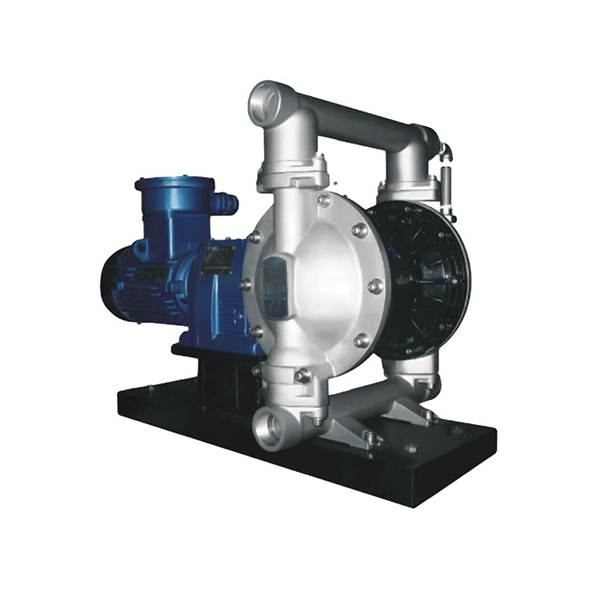
electric diaphragm pumps for agricultural irrigation
Electric diaphragm pumps, with their high efficiency and reliability, are widely used in applications requiring leak-free, high-precision conveying, and are suitable for quantitative conveying of liquids.
Description
The electric diaphragm pump is a volumetric pump powered by a motor, utilizing the reciprocating deformation of a diaphragm to transfer liquids. Its working principle is similar to a plunger pump, enabling the efficient and accurate transport of corrosive, particle-laden, high-viscosity, volatile, flammable, and highly toxic fluids. Widely used in industrial fields, this pump excels in both precision and reliability.
Features
- Convenient maintenance: Designed for easy cleaning and reduced waste, with corrosion-resistant stainless steel bolts for long-term stability and simple disassembly/reassembly.
- Precision fit parts: Wear-resistant end bearings ensure accurate valve stem positioning, efficiency in long-term use, and easy replacement to minimize downtime.
- Protected discharge port design: Common discharge ports prevent vapor erosion of seals, extending pump life. Idle function enables easy tank loading/unloading and reduces liquid residue.
- Sturdy external structure: Corrosion-resistant housing and epoxy-coated aluminum centerpiece prevent leaks and ensure fluid purity; 316 stainless steel option available for demanding environments.
- Fluid compatibility: Multiple housing material options (aluminum, stainless steel, ductile iron, polypropylene, conductive acetal, PTFE) ensure compatibility with various fluids.
- Reasonable seal design: Tightly locked diaphragm provides durable and reliable liquid sealing, preventing leaks and environmental contamination.
- Heavy-duty diaphragm plate: Secure clamping prevents diaphragm leakage or dislodgement, minimizing downtime and boosting reliability.
- Long-lasting valve stem: Made from 300 series stainless steel for excellent corrosion resistance and extended service life in humid conditions.
- Elastic material selection: Valve seat and ball are made from high-elasticity materials for reliable sealing, compatibility, improved suction capacity, and longer pump life.
Main Applications
- Chemical industry: Handling corrosive and hazardous liquids (acids, bases, solvents).
- Pharmaceutical industry: Transporting medicinal fluids, chemical reagents, dangerous liquids, and high-viscosity substances.
- Food & beverage: Moving high-viscosity liquids such as sauces, syrups, and juices.
- Environmental protection: Treating wastewater, sewage, and liquids with particles.
- Oil & gas: Transferring oil, fuel, and chemical liquids.
- Agricultural irrigation: Spraying pesticides and fertilizers in irrigation systems.