

- industrial air compressor
- desiccant compressed air dryer
- diesel air compressor
- large vacuum pump
- oil free piston air compressor
- oil free screw air compressor
- oil free scroll air compressor
- pm vsd dual stage screw air compressor
- pm vsd single stage screw air compressor
- refrigerated air dryer
- screw blower
- single stage double screw air compressor
- two stage double screw air compressor
- ultra high pressure air compressor


 English
  Français
  Tiếng Việt
  Italiano
  Nederlands
  Türkçe
  Svenska
  Polski
  Română
  Latviešu
  한국어
한국어  Русский
  Español
  Deutsch
  Українська
  Português
  العربية
  Indonesian
  Čeština
  Suomi
Suomi  Eesti
Eesti  Български
  Dansk
Dansk  Lietuvių
  Bokmål
  Slovenčina
  Slovenščina
  Ελληνικά
  Magyar
  עברית
עברית 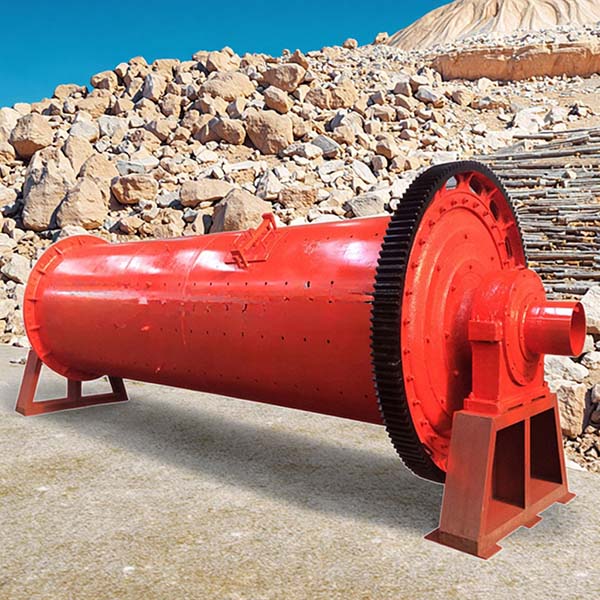
intermittent ball mill for grinding new building materials
Intermittent ball mill through the interaction between grinding media and materials to achieve material crushing, and the use of intermittent batch operation mode, that is, each time only a certain amount of material grinding, work is completed before stopping and reloading new materials.
Description
Intermittent (batch) ball mill is suitable for grinding many different types of materials and allows flexible adjustment of grinding time and degree according to specific needs. This equipment is widely used in building materials, refractory materials, ore processing, chemical fertilizer, glass ceramics, metal beneficiation, and other industries due to its simple operation, compact structure, and excellent grinding effect. It can efficiently and uniformly grind materials, making it ideal for applications that require fineness adjustment and precision grinding.
Working Principle of Intermittent Ball Mill:
The intermittent ball mill usually consists of two grinding bins with a horizontal cylindrical structure and external gear drive. Material enters the hollow shaft via the feeding device and is uniformly fed into the first bin through a spiral device. The first bin is equipped with stepped or corrugated liners and filled with steel balls of various specifications. As the cylinder rotates, steel balls are lifted by centrifugal force to a certain height and then fall due to gravity, impacting and grinding the material through strong impact and friction for rough grinding.
The roughly ground material then enters the second bin through a single partition. The second bin, equipped with a flat lining plate and steel balls, provides further fine grinding. After continuous grinding in both bins, the finely ground material is discharged through the discharge grate plate, completing the grinding process.
Technical Advantages of Batch Ball Mill:
- Durable Structure: Features a cast steel hollow shaft, replaceable lining, cast rotary gear (hobbing processed), and a cylinder with embedded wear-resistant lining for strong wear and corrosion resistance, extending equipment life.
- Smooth Operation: High operational stability reduces mechanical failures and ensures production continuity and efficiency.
- Efficient Energy Conversion: Reasonable structural design and transmission mode allow efficient utilization of motor power, ensuring effective grinding and improved production efficiency.
- Strong Adaptability: Good performance with various ores and abrasive materials, handling diverse materials to meet varied production needs.
- Batch Production: Suitable for small batch material processing, laboratory or small-scale production, with flexible adjustment of production batches compared to continuous ball mills.
Application Areas of Batch Ball Mill:
- Cement Industry: Widely used in cement production for grinding raw materials, ensuring quality and efficient production of cement products.
- Building Materials: Provides required fineness and uniformity for refractory materials and silicate products in new building materials production.
- Mineral Processing Industry: Efficient grinding of ores in the beneficiation process of ferrous and nonferrous metals, aiding metal extraction and improving mineral processing efficiency.
- Fertilizer Production: Grinds fertilizer raw materials (e.g., phosphate ore, potassium ore) into fine powder, improving solubility and fertilizer effectiveness.
- Glass and Ceramic Industry: Grinds raw materials to ensure consistent quality and desirable physical properties in glass and ceramic products.
- Scientific Research and Laboratory Applications: Commonly used in research institutes and labs for small-scale material grinding experiments and the study of new materials and processes, thanks to its adjustable batch production mode.