

- industrial air compressor
- desiccant compressed air dryer
- diesel air compressor
- large vacuum pump
- oil free piston air compressor
- oil free screw air compressor
- oil free scroll air compressor
- pm vsd dual stage screw air compressor
- pm vsd single stage screw air compressor
- refrigerated air dryer
- screw blower
- single stage double screw air compressor
- two stage double screw air compressor
- ultra high pressure air compressor


 English
  Français
  Tiếng Việt
  Italiano
  Nederlands
  Türkçe
  Svenska
  Polski
  Română
  Latviešu
  한국어
한국어  Русский
  Español
  Deutsch
  Українська
  Português
  العربية
  Indonesian
  Čeština
  Suomi
Suomi  Eesti
Eesti  Български
  Dansk
Dansk  Lietuvių
  Bokmål
  Slovenčina
  Slovenščina
  Ελληνικά
  Magyar
  עברית
עברית 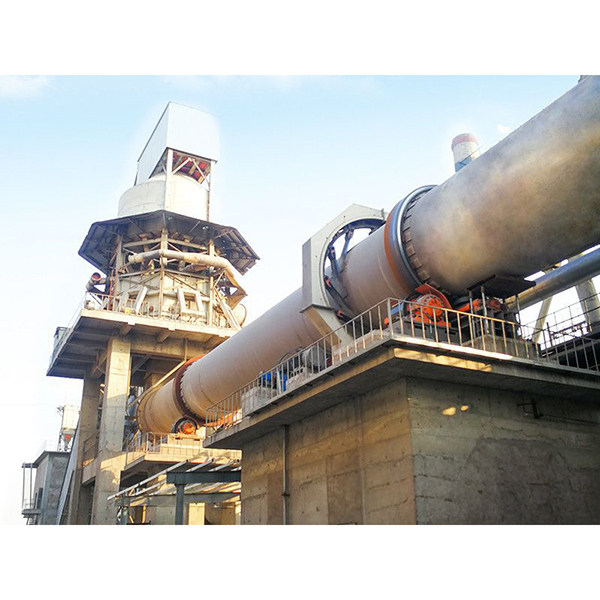
magnesium rotary kiln for the calcination of dolomite
Magnesium rotary kiln is specially designed for dolomite calcination characteristics, with high temperature, continuous, controllable characteristics, can realize the smooth transition of dolomite in the preheating, decomposition, sintering of the three stages and improve the thermal efficiency.
Description
Magnesium Rotary Kiln Overview
Magnesium rotary kiln is suitable for Pijiang process, in which the calcined dolomite will be mixed with ferrosilicon and other reductants to carry out vacuum reduction reaction, so as to generate high purity magnesium metal.
Magnesium rotary kiln with scientific structural design, high thermal energy utilization rate and excellent sealing performance has become an indispensable main equipment in the current magnesium metal production line.
Features of Magnesium Rotary Kiln
- Mature and stable structure: composed of rotary cylinder, carrier support device, drive system, sealing device, kiln hood, cooler and preheater, etc., the overall structure is compact and smooth operation.
- Strong adaptability: for the special demand of Pijiang method on raw material calcination activity, the internal heat distribution of the equipment is uniform, and the calcined dolomite has good reaction activity.
- Sustainable operation: suitable for long cycle continuous operation, adapt to automation and intelligent production requirements.
- Convenient maintenance: sealing system, bearing system and combustion system are well-designed, easy to maintain and replace parts.
Advantages of Magnesium Rotary Kiln
- High thermal efficiency: equipped with vertical preheater and integrated cooling system, it can fully recover the high temperature tail gas, improve the utilization rate of heat energy and reduce fuel consumption.
- Save floor space: adopting short cylinder, vertical cooler and compact arrangement, effectively reducing the equipment floor space and civil construction investment.
- Good sealing performance: head and tail sealing structure optimization, to avoid high temperature flue gas leakage, improve safety and reduce environmental pollution.
- High quality of calcination: calcined dolomite products have uniform particles, high activity, low burn rate, which is conducive to the subsequent reduction reaction of magnesium metal.
- Low energy cost: optimize the heat exchange path and heat transfer efficiency, significantly reduce the energy cost per unit of output.
Working Principle of Magnesium Rotary Kiln
- Through the inclined rotary cylinder to realize the automatic advancement and uniform heating of materials. Dolomite raw materials are added continuously through the kiln tail (high end), and with the slow rotation of the kiln body, the materials are both axially forward and circumferentially tumbled inside the cylinder body, so as to realize the uniform distribution of heat.
- The fuel (usually gas, natural gas or heavy oil) is injected through the burner at the kiln head end to produce high temperature combustion gas, forming a stable flame and temperature field inside the kiln. Heat is transferred to dolomite by radiation, convection, conduction, etc., so that it completes the process of preheating, decomposition (release of CO₂), sintering, etc. in turn, forming calcined white (activated magnesium oxide) at the head end of the kiln, which is discharged from the unloading end and enters the cooling system.
- The high temperature flue gas is discharged through the kiln end, through the preheater and enter the system of cold raw materials for heat exchange, recovery of waste heat.
Application Fields of Magnesium Rotary Kiln
- Magnesium metal industry: suitable for Pijiang method of magnesium metal production line in the calcination of dolomite treatment, is the magnesium metal reduction process before the link.
- Refractory materials industry: part of the calcination process is also used for light burning magnesium oxide, intermediate magnesium products and other high temperature material preparation.
- Non-metallic mineral processing industry: can also be appropriately applied to other carbonate minerals (such as calcite, magnesite, etc.) of the calcination process.