

- industrial air compressor
- desiccant compressed air dryer
- diesel air compressor
- large vacuum pump
- oil free piston air compressor
- oil free screw air compressor
- oil free scroll air compressor
- pm vsd dual stage screw air compressor
- pm vsd single stage screw air compressor
- refrigerated air dryer
- screw blower
- single stage double screw air compressor
- two stage double screw air compressor
- ultra high pressure air compressor


 English
  Français
  Tiếng Việt
  Italiano
  Nederlands
  Türkçe
  Svenska
  Polski
  Română
  Latviešu
  한국어
한국어  Русский
  Español
  Deutsch
  Українська
  Português
  العربية
  Indonesian
  Čeština
  Suomi
Suomi  Eesti
Eesti  Български
  Dansk
Dansk  Lietuvių
  Bokmål
  Slovenčina
  Slovenščina
  Ελληνικά
  Magyar
  עברית
עברית 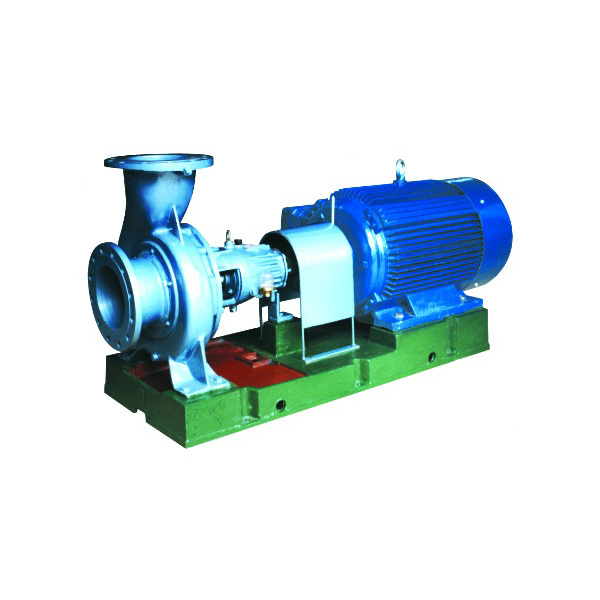
petrochemical process pumps meet to API 610 and VDMA 24297
This petrochemical process pump is designed according to API 610 (standard for pumps in the petrochemical industry) and VDMA 24297 (specification for light, medium pumps) for fluid transportation in petroleum, chemical and other industries.
Description
Petrochemical process pumps are designed for long-term stable operation under harsh conditions, offering high reliability, corrosion resistance, and high temperature resistance. Their operation is based on the centrifugal force principle, efficiently transporting liquids in petrochemical applications.
Working Principle:
- Liquid suction: Liquid enters through the pump inlet and flows into the pump chamber.
- Impeller acceleration: The impeller rotates, accelerating the liquid and pushing it toward the pump casing’s outer edge via centrifugal force.
- Energy conversion: As the liquid slows in the casing, its kinetic energy is converted to pressure, increasing pressure for discharge.
- Liquid discharge: The pressurized liquid exits through the pump outlet to complete the transport process.
API 610 Standard (Petrochemical Industry Pump Standard):
- Widely used in oil, gas, and chemical engineering for process pump design and manufacturing.
- Specifies construction requirements for horizontal/vertical, cantilevered/scaffolding pumps.
- Guidelines for selecting key materials (body, impeller, bearings, seals) for resistance to corrosion, temperature, and pressure.
- Sealing systems must offer high corrosion resistance and prevent leakage (mechanical seals, double face seals, etc.).
- Design emphasizes high stability and durability for long-term operation.
VDMA 24297 Specification (Light, Medium-sized Pump Standard):
- For light/medium-sized process pumps requiring high performance and stable long-term operation.
- Commonly used in chemical, pharmaceutical, and fluid-sensitive industries.
- Divides design requirements for light and medium-sized pumps to match different pressures, flows, and media.
Key Characteristics:
- High reliability: Cantilevered design, uniform load distribution ensures stability and reduces maintenance.
- High temperature and pressure resistance: Built to API 610, withstands temperatures up to 400°C and pressures up to 25MPa.
- Strong corrosion resistance: Materials like stainless steel, alloy steel, and titanium alloys for corrosive fluids.
- High efficiency and energy saving: Optimized fluid dynamics and impeller design for larger flow/head and lower energy consumption.
- Low noise and vibration: Advanced design and precision manufacturing reduce operational noise and vibration.
- Strong adjustability: Adjustable impeller, seals, bearings for different working conditions.
Application Areas:
- Petroleum mining and refining: Crude oil transport, oil heating, storage, blending.
- Chemical industry: Conveying acids, alkalis, solvents, liquefied gases, chlorides, and other corrosive fluids in chemical processes.
- Petrochemical industry: Raw oil transport, catalyst injection, refining process circulation.
- Metallurgical industry: Slurry transport, coolant circulation in smelting processes.
- Sewage & waste gas treatment: Liquid transport in sewage plants, industrial waste gas washing, gas desulfurization.
- Pharmaceutical industry: Chemical drug and pharmaceutical production, especially where fluid hygiene is critical.