

- industrial air compressor
- desiccant compressed air dryer
- diesel air compressor
- large vacuum pump
- oil free piston air compressor
- oil free screw air compressor
- oil free scroll air compressor
- pm vsd dual stage screw air compressor
- pm vsd single stage screw air compressor
- refrigerated air dryer
- screw blower
- single stage double screw air compressor
- two stage double screw air compressor
- ultra high pressure air compressor


 English
  Français
  Tiếng Việt
  Italiano
  Nederlands
  Türkçe
  Svenska
  Polski
  Română
  Latviešu
  한국어
한국어  Русский
  Español
  Deutsch
  Українська
  Português
  العربية
  Indonesian
  Čeština
  Suomi
Suomi  Eesti
Eesti  Български
  Dansk
Dansk  Lietuvių
  Bokmål
  Slovenčina
  Slovenščina
  Ελληνικά
  Magyar
  עברית
עברית 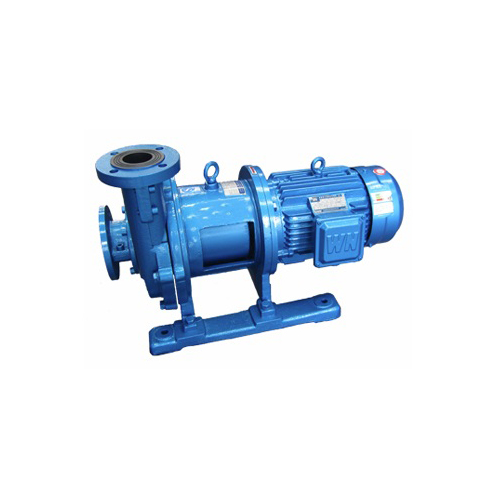
plastic magnetic drive centrifugal pump which is directly coupled
Direct-connected plastic magnetic centrifugal pump is a kind of pump through the combination of direct-connected design and magnetic drive technology, which is mainly used for conveying highly corrosive liquids.
Description
The plastic magnetic drive centrifugal pump features overflow parts made from F2, F3, F46, PFA, and similar corrosion-resistant plastics. Its direct-coupled structure delivers compactness and efficiency, making it ideal for small chemical installations and applications requiring high safety and leakage prevention.
Performance
- Flow rate: 1 to 30 m³/h
- Head: 3 to 25 m
- Maximum operating temperature: 80°C
- Pressure: 1.0 MPa
Applications
- Chemical industry: Hydrochloric acid, sulfuric acid, nitric acid, hydrofluoric acid, organic and inorganic mixed acids
- Pharmaceutical industry: Leak-free and contamination-free liquid transport
- Food & beverage: Hygienic liquid transfer processes
- Environmental protection: Waste liquid and sewage handling
- Electronic industry: Chemical solutions and ultrapure water transfer
Key Features & Advantages
- Direct-coupled design: Motor and pump are directly connected, reducing complexity, improving efficiency, and minimizing maintenance requirements.
- Seal-less magnetic drive: No mechanical seals, eliminating leakage risk and reducing wear and contamination.
- High corrosion resistance: Plastic materials withstand strong acids, alkalis, and solvents, suitable for harsh chemical environments.
- Compact and lightweight: Perfect for small installations; space-saving and easy to integrate.
- High efficiency and energy saving: Fewer mechanical components mean reduced energy loss and lower operating costs.
- Low maintenance: Seal-less and simplified structure lowers long-term maintenance costs.
Working Principle
- Motor drives the external magnet to rotate, which magnetically couples to the internal rotor.
- Magnetic force transmits power to the internal rotor, driving fluid flow.
- Rotor generates suction and pressure, transferring fluid through the pump.
- Seal-less design ensures no liquid contacts the motor, eliminating leakage risk.
Disadvantages
- Limited flow and pressure compared to pumps with couplings; not suitable for very high-flow or high-pressure applications.
- Higher initial cost due to magnetic drive and specialized plastics.
- Not ideal for extreme pressure or temperature environments.