

- industrial air compressor
- desiccant compressed air dryer
- diesel air compressor
- large vacuum pump
- oil free piston air compressor
- oil free screw air compressor
- oil free scroll air compressor
- pm vsd dual stage screw air compressor
- pm vsd single stage screw air compressor
- refrigerated air dryer
- screw blower
- single stage double screw air compressor
- two stage double screw air compressor
- ultra high pressure air compressor


 English
  Français
  Tiếng Việt
  Italiano
  Nederlands
  Türkçe
  Svenska
  Polski
  Română
  Latviešu
  한국어
한국어  Русский
  Español
  Deutsch
  Українська
  Português
  العربية
  Indonesian
  Čeština
  Suomi
Suomi  Eesti
Eesti  Български
  Dansk
Dansk  Lietuvių
  Bokmål
  Slovenčina
  Slovenščina
  Ελληνικά
  Magyar
  עברית
עברית 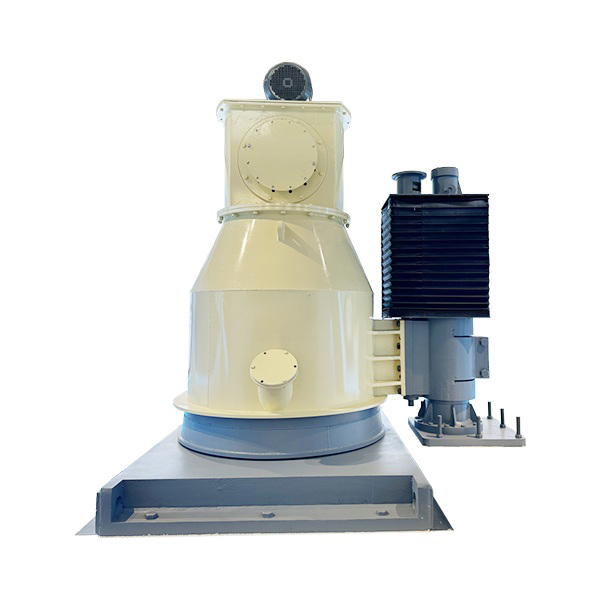
raymond mill for ultrafine grinding of nonmetallic minerals
Raymond mill originated from the early last century in the United States mill technology, used for a variety of ores and non-metallic minerals fine powder processing, after continuous innovation and development, is now widely used in metallurgy, building materials, chemical industry, mining and other industries.
Description
Ultra-fine Raymond Mill: Next-Generation Grinding Solution
Due to the design limitations, the traditional Raymond mill has gradually exposed its deficiencies in terms of fineness control, equipment maintenance and energy consumption level. In order to meet the new standards of today’s ultra-fine powder industry on product particle size, output and environmental requirements, we have systematically optimized the traditional model’s shortcomings and launched a new generation of ultra-fine Raymond mill, which realizes the integrated processing of crushing, grinding and ultra-fine.
Raymond Mill Features
- Compact Structure:The whole machine adopts the ground type installation, the height of the machine body is greatly reduced, only half of the height of the traditional raymond mill, greatly saving building space.
- New Sealing:The grinding roller adopts maintenance-free and lubrication-free new sealing technology, which completely avoids dust intrusion into the bearing and improves the stability and service life of the equipment.
- Intelligent Grading:The grading system introduces a suspended design, which can automatically lift according to the operating state, reducing the vibration of the equipment and noise pollution.
- Innovative Crushing:The optimized design of contact between the arc-shaped grinding roller and grinding ring is adopted to prolong the residence time of the material in the grinding area and realize the preparation of finer particles, and the particle size of the finished product can be as fine as 10μm.
- System Optimization:The overall negative pressure closed operation, effective control of dust spillage, the production environment is clean, the emission concentration is far below the national standard.
Advantages of Raymond Mill
- Plant Savings:The equipment as a whole is small, reducing the cost of civil engineering, easy to build new or expand the project quickly into production.
- Easy Maintenance:Classifier rotating boom structure, without large lifting tools, maintenance space is open, greatly reducing the difficulty of maintenance.
- High Efficiency and Energy Saving:Intermediate tangential cyclone air inlet technology, so that the material in the cavity to form a stable vortex rising flow state, enhance the classification efficiency, reduce system energy consumption.
- Excellent Environmental Performance:The whole negative pressure operation, dust emissions ≤ 30mg/m³, the production workshop environment is excellent, in line with or even better than the national environmental standards.
- Particle Size Can Be Controlled:The fineness of the finished product can be flexibly adjusted in the range of 5μm to 45μm, which is widely adapted to the different requirements of different fields on the fineness of the powder.
- All-in-one Function:A device at the same time with coarse crushing, fine grinding, ultra-fine powder making function, enhance the compactness and efficiency of the production line layout.
Working Principle of Raymond Mill
The core operation of ultra-fine raymond mill originates from the pendulum grinding principle of traditional raymond mill. The host drives the center shaft to rotate through double belt transmission, and the shaft end is connected to the plum blossom frame, which fixes multiple grinding roller devices. In the process of operation, the plum blossom frame drives the grinding roller to rotate around the center axis, and at the same time, under the action of centrifugal force, the grinding roller presses the surface of the grinding ring and rotates.
After the material is fed into the grinding chamber evenly through the feed opening, it is centrifugally thrown to the grinding ring, and crushed into fine powder by the double action of grinding rollers and friction. The fine powder rises with the airflow and is screened by the grading device, and the powder that meets the requirements of particle size is sent to the cyclone collector for collection, while the coarse particles fall back to the grinding chamber for further grinding.
The design of tangential cyclone air inlet mode makes the material keep stable vortex movement in the process of crushing and grading, which strengthens the effect of coarse and fine separation, and at the same time, reduces the load of the fan, which significantly improves the overall energy efficiency. The whole system is in a negative pressure closed state, preventing dust leakage, to ensure that the environmental protection standard operation.
Application Areas
- Non-metallic mineral processing: calcite, limestone, talc, kaolin, barite, fluorite, graphite, bentonite and so on.
- Metallurgical industry: iron oxide red, manganese ore, iron ore, copper ore, phosphorus ore and other powder preparation.
- Building materials industry: gypsum, ceramics, bauxite, glass raw materials, insulation materials and other raw materials grinding.
- Chemical industry: silicon carbide, calcium hydroxide, chemical fertilizer, compound fertilizer, activated carbon and other materials processing.
- Environmental protection and energy field: fly ash, coal gangue, bituminous coal, coking coal, lignite and other solid waste reuse and resource development.
- The field of new materials: high-performance ceramics, electronic materials, functional filler powder manufacturing.