

- industrial air compressor
- desiccant compressed air dryer
- diesel air compressor
- large vacuum pump
- oil free piston air compressor
- oil free screw air compressor
- oil free scroll air compressor
- pm vsd dual stage screw air compressor
- pm vsd single stage screw air compressor
- refrigerated air dryer
- screw blower
- single stage double screw air compressor
- two stage double screw air compressor
- ultra high pressure air compressor


 English
  Français
  Tiếng Việt
  Italiano
  Nederlands
  Türkçe
  Svenska
  Polski
  Română
  Latviešu
  한국어
한국어  Русский
  Español
  Deutsch
  Українська
  Português
  العربية
  Indonesian
  Čeština
  Suomi
Suomi  Eesti
Eesti  Български
  Dansk
Dansk  Lietuvių
  Bokmål
  Slovenčina
  Slovenščina
  Ελληνικά
  Magyar
  עברית
עברית 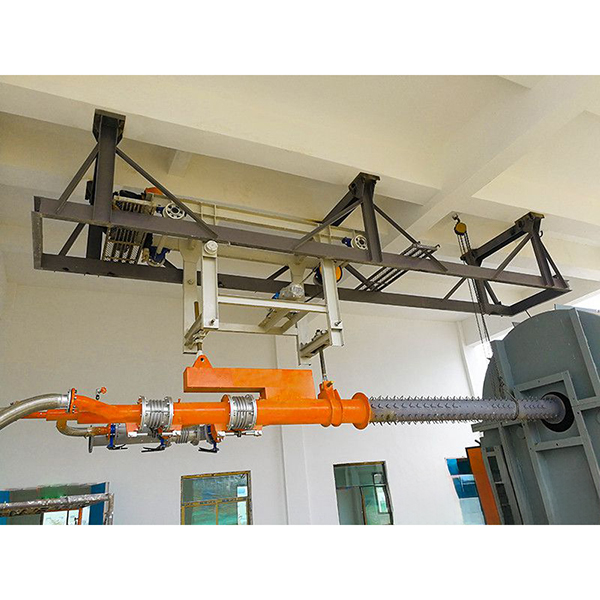
rotary kiln gas burner for single or multiple gaseous fuels
The rotary kiln gas burner combines the advantages of the four-channel burner and enhances the combustion adaptability by optimizing the structure and process parameters, which is suitable for rotary kiln systems in various metallurgical, chemical and other industries.
Description
The rotary kiln gas burner is specially designed for rotary kiln, which can adapt to a variety of gas fuels. Through reasonable airflow regulation and mixing of gas and air, the rotary kiln gas burner not only improves the combustion efficiency, but also effectively controls the flame characteristics, providing a stable heat source for the production process.
Features of rotary kiln gas burner:
- Four-channel design: the use of four-channel burner structure, can effectively distribute the gas, air and primary air, secondary air, so as to optimize the mixing efficiency and improve the combustion effect.
- Multi-fuel adaptability: the burner can support the use of a variety of gas fuels, adaptability, to meet the diverse needs of different industries rotary kiln.
- High-efficiency combustion: the burner design ensures that the gas and air, primary air and secondary air are fully mixed to provide stronger heat density and higher combustion efficiency.
- Automatic control: including automatic ignition, flame detection and combustion automation control function, easy to operate and maintain, reduce manual intervention.
- Flexible regulation: gas flow can be continuously adjusted, with PID control regulation, can adapt to the precise adjustment requirements of the furnace temperature, to maintain temperature stability.
Advantages of rotary kiln gas burner:
- High-temperature and high-pressure operation: it is suitable for high-temperature working conditions with hot gas pressure of 300-500Pa and temperature range of 350-500°C, and it can continue to operate efficiently under the harsh environment.
- High temperature valve and ignition design: the use of high temperature valves and high temperature ignition system, to ensure the reliability and safety of the equipment for a long time operation.
- High combustion efficiency and low emissions: through the optimization of air and gas mixing, can effectively improve the combustion efficiency, reduce exhaust emissions, in line with environmental requirements.
- Flexible automation control: PID control system makes the combustion process more stable, adapting to different production loads and temperature changes, improving production efficiency and stability.
The working principle of rotary kiln gas burner:
- By adjusting the ratio of gas and combustion air to ensure that the two are fully mixed in the burner. First of all, the gas is sent into the burner through the pipeline, and together with the air, it is controlled by the regulating valve to enter the combustion chamber. In the combustion chamber, the gas and air are burned fiercely according to the set ratio, and the resulting high-temperature gas is introduced into the rotary kiln for heating treatment.
- In order to achieve the combustion effect, the design of the burner includes a plurality of duct structures to provide axial air, gas air, cyclone air and center air, respectively, to regulate the direction, shape and intensity of the flame. In addition, the burner’s regulating system is able to adjust the length, thickness and intensity of the flame in real time according to the production demand, thus ensuring the stability and consistency of the rotary kiln temperature.
Application areas of rotary kiln gas burner:
- Electric power industry: used in electric power production rotary kiln system to provide a stable heat source to ensure that the fuel is fully combusted.
- Chemical industry: mainly used in the production of fertilizers, chlor-alkali, sulfuric acid and other chemical products, to provide the required high temperature environment.
- Metallurgical industry: In the process of metal smelting, rotary kiln gas burner can effectively provide the required high temperature gas to promote the metal reduction and smelting process.
- Building materials industry: used in the production process of cement, lime and other building materials, providing efficient heat treatment process to ensure product quality.
- Mineral industry: It is suitable for the treatment of metal ores, iron ore, bauxite and other ores, and meets the high temperature demand in the kiln through the efficient combustion system.