

- industrial air compressor
- desiccant compressed air dryer
- diesel air compressor
- large vacuum pump
- oil free piston air compressor
- oil free screw air compressor
- oil free scroll air compressor
- pm vsd dual stage screw air compressor
- pm vsd single stage screw air compressor
- refrigerated air dryer
- screw blower
- single stage double screw air compressor
- two stage double screw air compressor
- ultra high pressure air compressor


 English
  Français
  Tiếng Việt
  Italiano
  Nederlands
  Türkçe
  Svenska
  Polski
  Română
  Latviešu
  한국어
한국어  Русский
  Español
  Deutsch
  Українська
  Português
  العربية
  Indonesian
  Čeština
  Suomi
Suomi  Eesti
Eesti  Български
  Dansk
Dansk  Lietuvių
  Bokmål
  Slovenčina
  Slovenščina
  Ελληνικά
  Magyar
  עברית
עברית 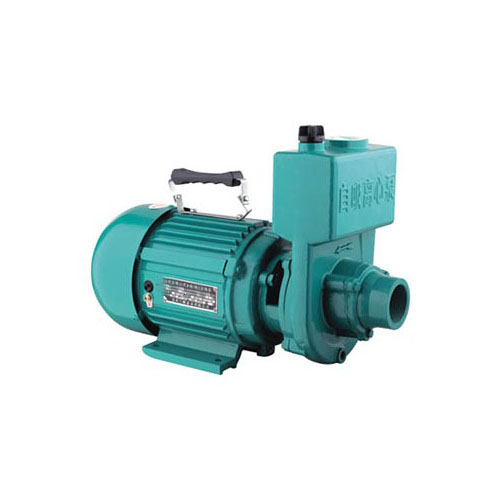
self priming centrifugal pump for domestic water supply
self priming centrifugal pump consists of an electric motor, sealing system and pump, designed for the self-priming and transfer of clear water. The pump utilizes the principle of centrifugal force and is capable of starting and running without the need for an external water source.
Description
Self priming centrifugal pumps are pumps that can be started without an external water source or pool. Its operating principle combines centrifugal force and self-priming, enabling it to initially remove air from the pump body and piping and draw water into the pump.
The following is the working principle of self priming centrifugal pump:
- Centrifugal force effect: The basic working principle of self priming centrifugal pump is to use the electric motor to drive the impeller to rotate, thus generating centrifugal force. When the pump impeller rotates, water is sucked in from the pump inlet and forced to discharge outward, forming a certain flow rate and head. The rotation of the impeller accelerates the flow of water, which increases in speed and decreases in pressure. Due to the pressure difference, water is sucked in from the pump inlet and discharged through the impeller outlet.
- Self-priming process: The main difference between self priming centrifugal pump and ordinary centrifugal pump is that it has a “self-priming” function. In the early stage of the pump start, the pump body and suction pipe is full of air, self-priming pump through its special design (usually set up in the pump casing or pump body with a liquid guide device) to help discharge the air and fill the water. The self-priming process is usually accomplished in the following steps:
When the pump starts to run, an electric motor drives the impeller to rotate, generating centrifugal force. This centrifugal force causes the air inside the pump body to be expelled and released through the pump’s drain port. Once the air is completely removed from the pump body, water begins to flow into the pump body and into the impeller’s flow path. With the increasing flow of water, the pump begins to produce water flow and water pressure, to reach the normal working condition. - Water flow and head: After the pump starts and draws in water, the centrifugal force discharges the water and conveys it through the pipeline to the desired destination. The head of self priming centrifugal pump is closely related to the speed, size and design of its impeller. Larger impellers or higher speeds usually produce higher heads.
- Self-priming ability: Self priming centrifugal pump “self-priming” ability usually refers to the pump in empty operation or the first start, can be sucked from the empty pipeline water and maintain stable operation ability. Generally speaking, the self-priming ability depends on the design of the pump, including the structure of the pump body, impeller size, pump shaft speed and other factors. The self-priming time is usually short, and the initial self-priming process can usually be completed within a few minutes.
Self priming centrifugal pumps are widely used in the following places:
- Drainage operations such as rivers, lakes, wells, etc.: suitable for pumping these water sources for drainage and transportation.
- Household water supply: to provide clean water for families to meet the needs of daily life.
- Agricultural irrigation: provide stable water support for farmland, greenhouse, etc.
- Aquaculture: for water supply in aquaculture and breeding areas.
- Landscaping: to provide irrigation water source for gardens, lawns and green areas.
- Commercial facilities: such as hotels, canteens and water supply systems for high-rise buildings.
The electric pump can operate stably under the following conditions:
- Medium requirements: for non-corrosive clear water, the sand content in the water does not exceed 0.10%, the particle size is not greater than 0.2mm.
- Temperature range: the medium temperature does not exceed +40 °C.
- pH range: the pH value of water should be between 6.5 and 8.5.
- Power supply specifications: for 50Hz frequency, single-phase 220Vac voltage, voltage fluctuation range between 0.9 and 1.1 times the rated value.
- Precaution before use: the air inside the pump must be drained before use, otherwise it may not be able to pump water normally.
Technical Parameters
| Model | Power(W) | Max.Q(m³/h) | Max.H(m) | Max Suction Head(m) | Synchronous Speed(rpm) | Voltage(V) | Suction caliber(mm) | Outlet caliber(mm) |
|---|---|---|---|---|---|---|---|---|
| 40bd-1100 | 1100 | 32 | 15 | 8 | 2860 | 220 | 65 | 65 |