

- industrial air compressor
- desiccant compressed air dryer
- diesel air compressor
- large vacuum pump
- oil free piston air compressor
- oil free screw air compressor
- oil free scroll air compressor
- pm vsd dual stage screw air compressor
- pm vsd single stage screw air compressor
- refrigerated air dryer
- screw blower
- single stage double screw air compressor
- two stage double screw air compressor
- ultra high pressure air compressor


 English
  Français
  Tiếng Việt
  Italiano
  Nederlands
  Türkçe
  Svenska
  Polski
  Română
  Latviešu
  한국어
한국어  Русский
  Español
  Deutsch
  Українська
  Português
  العربية
  Indonesian
  Čeština
  Suomi
Suomi  Eesti
Eesti  Български
  Dansk
Dansk  Lietuvių
  Bokmål
  Slovenčina
  Slovenščina
  Ελληνικά
  Magyar
  עברית
עברית 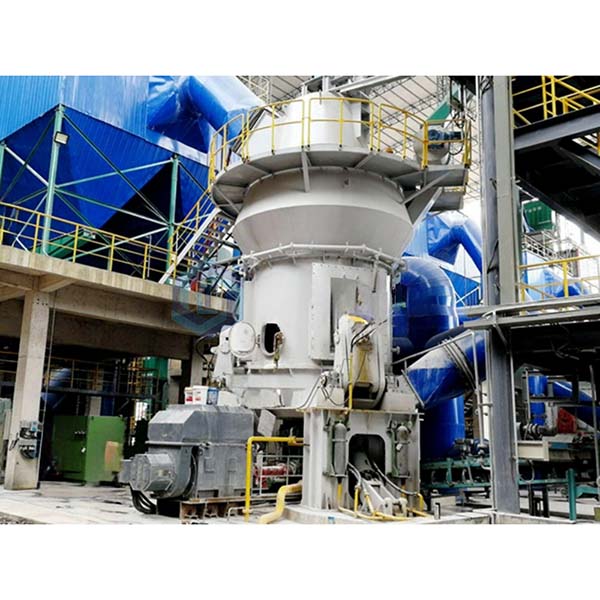
ultrafine vertical roller mill with double pump oil supply
Ultrafine Vertical Roller Mill is a kind of high-efficiency equipment integrating ultrafine powder grinding, grading and conveying, which is widely used in the fields of chemical industry, metallurgy, non-metallic minerals, etc. It is able to process all kinds of brittle materials into the required ultrafine micro-powder.
Description
Ultrafine Vertical Roller Mill Overview
Ultrafine Vertical Roller Mill is capable of grinding non-flammable and explosive minerals, non-corrosive and brittle materials with Moh’s hardness below grade 5, density less than 3.2, and compressive strength below 150MPa. Commonly applicable materials include calcium carbonate, calcite, barium sulfate, talc, wollastonite, chlorite, dolomite, graphite, kaolin, limestone, and more.
The advantage of ultrafine vertical roller mill is to complete grinding and classification in one step, providing efficient, energy-saving, environmentally friendly grinding solutions that achieve very high fineness—ideal for high-precision production needs.
Working Principle of Ultrafine Vertical Roller Mill
- The mill consists of electric motor, reducer, grinding roller device, grinding disc, pressurized device, powder selector, body, oil station, PLC electric control system, and more.
- The main motor drives the reducer and grinding disk to rotate, while air enters the mill body from the air inlet. Material enters via the screw feeder and falls to the center of the grinding disk.
- Under centrifugal force, material moves uniformly from the center to the edge of the grinding disk. In the crushing zone, grinding rollers exert pressure and extrude the larger material, forming a bed for inter-granular crushing.
- Material continues to the disk edge, where airflow from the wind ring carries finer particles away; larger particles fall back for regrinding.
- The separator: in the upper section, coarse particles are sent back for regrinding, while qualified fine powder is carried out with airflow. Rotor speed control ensures different fineness levels.
- Impurities (such as iron) remain due to gravity and are discharged through the bottom scraper plate.
- Grinding pressure is adjustable via the hydraulic system to adapt to material hardness and ensure efficient operation.
Advantages of Ultrafine Vertical Roller Mill
- High whiteness and purity: The principle of layer grinding means brief material retention in the mill, reducing repeated grinding and iron contamination—ideal for white or transparent materials requiring high purity.
- High-efficiency grinding and grading: German Alpine multi-head powder selector allows frequency control of each rotor, achieving target fineness in one pass with up to 70% of finished product <2μm and low 325 mesh residue.
- Accurate automatic control, energy saving: PLC/DCS automatic control for precise grinding pressure; frequency-converted host speed for notable energy savings (30%-50% less than traditional mills).
- Easy maintenance and lubrication: Separate lubrication stations for each grinding roller with double-pump oil supply ensure reliable lubrication and cooling, reducing leakage risk.
Application Areas of Ultrafine Vertical Roller Mill
- Chemical industry: Efficient grinding of various chemical raw materials, suitable for fine powders in pigments, coatings, plastic fillers, etc.
- Metallurgical industry: Used for ore grinding to improve grade; applicable in metallurgical production lines.
- Non-metallic minerals: Processes gypsum, talc, calcite, wollastonite, and more into high-fineness products for diverse fields.
- Building materials industry: Provides efficient grinding for cement, lime, and other materials to enhance product quality.
- Environmental protection industry: Suitable for waste resource utilization and environmental protection, like waste and garbage treatment, thanks to high efficiency and low energy use.
- Food and pharmaceutical industry: Used for applications where high powder fineness is required, such as refining food or drug ingredients.