

- industrial air compressor
- desiccant compressed air dryer
- diesel air compressor
- large vacuum pump
- oil free piston air compressor
- oil free screw air compressor
- oil free scroll air compressor
- pm vsd dual stage screw air compressor
- pm vsd single stage screw air compressor
- refrigerated air dryer
- screw blower
- single stage double screw air compressor
- two stage double screw air compressor
- ultra high pressure air compressor


 English
  Français
  Tiếng Việt
  Italiano
  Nederlands
  Türkçe
  Svenska
  Polski
  Română
  Latviešu
  한국어
한국어  Русский
  Español
  Deutsch
  Українська
  Português
  العربية
  Indonesian
  Čeština
  Suomi
Suomi  Eesti
Eesti  Български
  Dansk
Dansk  Lietuvių
  Bokmål
  Slovenčina
  Slovenščina
  Ελληνικά
  Magyar
  עברית
עברית 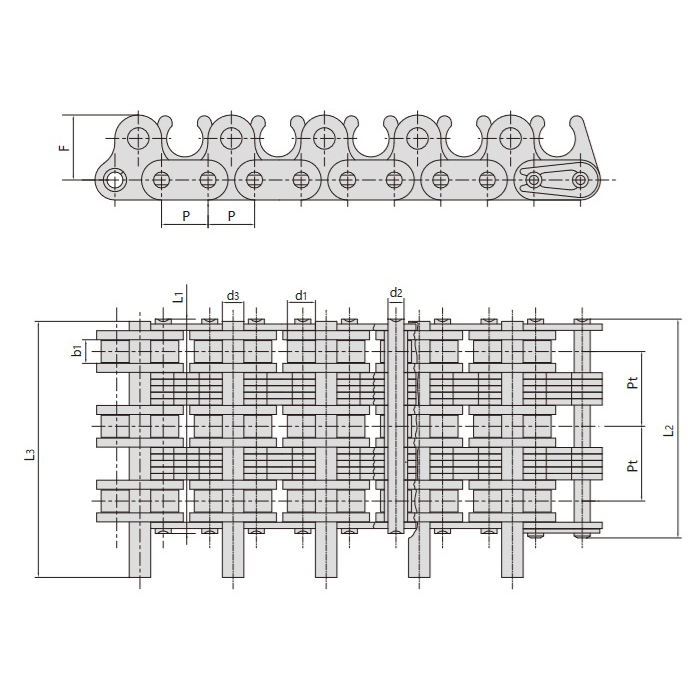
roller chain for textile machinery with various materials available
Chain for textile machinery is an important transmission component in textile industry, which is widely used in all kinds of textile equipments, such as looms, dyeing and finishing machines and shuttle looms. The following is a detailed description of the introduction, characteristics and working principle of chains for textile machinery.
Description
The chain for textile machinery is a ring-like structure composed of multiple interconnected links, typically made from high-strength steel or alloy materials to withstand substantial loads and wear. Its design and manufacture account for the operating speed, load characteristics, and working environment of textile machinery.
Features
- High Strength & Wear Resistance: Built to endure high tensile forces and abrasion, ensuring reliable operation in demanding textile processes.
- Corrosion Resistance: Materials are treated for resistance to water and chemicals, prolonging service life in moist and chemically active environments.
- Stability: Engineered for stable performance, minimizing the risk of slippage or breakage and ensuring consistent equipment operation.
- Flexibility: Designed to accommodate various movement trajectories and transmission methods, allowing adaptation to different textile machinery requirements.
- Easy Maintenance: Chain systems are simple to maintain, requiring only regular lubrication and wear checks to keep them in optimal condition.
In summary, textile machinery chains offer high strength, corrosion resistance, stability, flexibility, and ease of maintenance, making them an essential component for efficient and reliable operation in textile manufacturing environments.
Technical Parameters

roller chain for textile machinery technical table